To the Editor,
My name is Mia Feroleto, and I am supporting the reelection of Tom Charlton. Here are my thoughts.
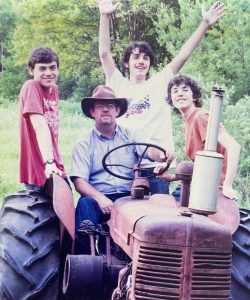
A lifelong resident of Vermont and 50-year member of the Chester community, Tom Charlton has traveled extensively in the Middle East, where he participated in archeological digs in the Holy Land. His three sons affectionately call him “Indiana Jones,” and he has been known to sport a hat similar to the one worn by Harrison Ford in his iconic role.
A lifelong Boy Scout, Charlton continues to lead a scout troop after years of instilling leadership skills in young men in the Chester area. Charlton and his scout troop supported my work in the return of 131 artifacts stolen from the dead at the Wounded Knee Massacre by organizing a clothing drive to send needed clothing out to the Pine Ridge Reservation in South Dakota. He and his troop attended the ceremony in Barre, Mass., as these sacred pieces were transferred back to the Lakota People, and one of his Eagle Scouts completed his requirements to obtain Eagle status by organizing a major effort to send horse equipment out to Pine Ridge to support the spiritual rides that happen there each year, such as the Big Foot Ride.
As pastor of the Baptist Church in Chester for 25 years, he learned what it means to counsel others during the most difficult times of life: death, divorce, illness, financial loss. He had the benefit of presiding over some of the most joyous times in the lives of Vermonters as well: births, weddings, anniversaries, awards.
Charlton’s family came to America in 1630. Our country is founded on immigration and has been so for hundreds of years. Current waves of migration represent new challenges for a state that is predominantly white in its makeup, and residents are being asked to step up to welcome new neighbors from completely different backgrounds. In addition, Vermont faces similar issues as Southern states when confronting the problem of illegal aliens and criminals coming into our state, bringing with them such issues as drugs, sex trafficking, human trafficking, and countless other problems that will destabilize Vermont. However, there is now much more traffic on the northern border, which is not as well policed as our country’s southern line of demarcation. The Vermont Legislature is continually challenged to look at the humanitarian crises that are causing vast numbers of people to migrate elsewhere in spite of the hardships required to make the trip. The economic problems created within the state by undocumented workers willing to perform menial jobs for less than minimum wages sometimes takes away existing income from Vermont residents. It is impossible for a local roofing contractor to compete with those employing illegal aliens and face the threat of their business going under because they are unable to do so. On the other hand, they also provide a much-needed workforce in our hard-strained agriculture industry.
Many Vermonters cannot raise a family without being supplemented by a government program. The costs of housing, health, food, education, and transportation continue to rise, with Vermonters unable to keep up. Policies have been created at the state level that do not have control over inflation, making it much more difficult to accomplish goals in the Statehouse that require complicated decision making. Our relatively new challenge which is unique is we now find affluent communities are setting policies for the rest of the state. This flies in the face of what makes Vermont so special to begin with. The average Vermonter sincerely wants to preserve the Vermont way of life.
Many members of the House of Representatives are willing to collaborate across the aisle and recognize the need to do so. The countrywide popularity of Gov. Phil Scott is a testament to that fact, as Scott is a good example of a politician representing all of his people, regardless of political party. Charlton’s view is that the biggest challenge Vermonters are facing is valuing someone else’s point of view. We must listen to each other and take on board the opinions of everyone as we find common ground.
People in Vermont are engaged, but not necessarily with each other, only with those neighbors who agree with them. And in the meantime, our children are becoming service providers to the wealthy, who buy up properties around the state. These same wealthy people set policy for everyone. Land in Vermont represents legacy. Land represents family. For a grandparent to not be able to carve off a piece of land to give to a grandchild due to conservation restrictions sacrifices the Vermont way of life.
The local Republican Party drafted Tom Charlton to run. It took him three weeks to decide to campaign for office, even though politics had never been on his list of things to do with his life. Charlton is not unlike current Gov. Phil Scott. He is a moderate and interested in what is best for all Vermonters, moving far beyond party lines.
Charlton personifies the philosophy put into practice by his family and the residents of Vermont, that of helping each other when needed. His paternal grandmother was an activist in New York City working toward racial reconciliation in Harlem in the late 1920s and early 1930s, while his paternal grandfather served as a member of the school board and as a selectman. His uncle followed in his father’s footsteps. Growing up, Charlton remembers sitting at the kitchen table while the local issues of the day were strenuously debated. Volunteerism was the norm in the Charlton house and consistent throughout the State of Vermont. The willingness to help each other during times of crisis is one of the true characteristics of the State of Vermont and part of what makes it so special. If a neighbor’s barn burns down, men are there with their tool kits. If there is a death in the family or someone is sick, a casserole or meatloaf is delivered the next day. This is the Vermont way, a lifestyle worth preserving.
In his first term, Charlton focused on his goal of getting his colleagues in the House of Representatives to listen to him and to each other as the difficult and compelling issues within the state were discussed and bills drafted. Retaining a civil discourse can be a challenge when debates become heated and representatives cling to party lines. The fact that Vermont residents are stepping up to protect their own rights and properties has provided motivation for their representatives to listen closely to their wants and needs, expanding the conversation and encouraging creative discourse.
The divide has shifted from historic party lines to a split more driven by economic factors. Small towns and rural farms have just as much right to be heard and considered as Vermont’s largest, more-urban communities, such as Burlington.
Charlton votes his conscience. When he was drafted to run, the Republican Party told him that they would never tell him how to vote on any given issue. His decisions were his to make. He is not someone who goes in for grandstanding or photo ops. He speaks when he has something to say or sees a particular point of view not being represented.
As a member of the Housing Committee, Charlton brings his expertise in building and being a landlord, and his extensive experience as a pastor to the table in not only evaluating the practical side of affordable housing, but also the emotional and psychological issues being confronted by financially challenged Vermonters. Combining the ability for geographic areas to work together on such projects as prefabricated housing allows the State of Vermont to take advantage of steeper discounts available to larger developers building low-income housing. Good communication fosters collaboration in this manner and is just one example of a significant benefit to Vermonters. Tom Charlton has played a part in this process.
Act 250 strenuously regulated how large development happens. For rural communities with no zoning, it applies at a much lower threshold. The average person does not have the time or the money to hire a lawyer to obtain a permit for Act 250 approval. High-income individuals have pockets that are deep enough to cover whatever expenses are involved for an Act 250 application, but for local residents, selling their land may become their only option. Land can be an asset but for Vermonters, land is also family. Multigenerational family land is part of the family. It is personal.
The influx of affluent individuals moving into the state is leveraging people off their land. The cost of taxes and home insurance, for some, is prohibitive. One local example involves a married couple working two jobs each who can no longer afford their homeowners insurance in addition to rising taxes. They are leaving their longtime family home for this reason. The State of Vermont cannot step in to fill the gap for these residents. They cannot go into the insurance business. Addressing the cost of homeowners insurance is simply another complication of the housing issue that creates pressure and economic hardship for Vermonters. Local Vermont residents cannot be pushed out to make way for the affluent and elite to take over. Newer residents need to value not only their stunning surroundings, but also the quality and caliber of Vermont culture.
The State of Vermont is focusing on what it can do to help people play catchup when they get behind on their rent and other expenses. With organizations around the state such as Neighborhood Connections in Londonderry, SEVCA and the Chester-Andover Family Center in Chester, to name a few, there is support available for those who put in the effort to find it.
Through his work on the Housing Committee, Charlton is helping develop a land bank that acquires vacant and abandoned properties in foreclosure and subject to tax sales. They clean up the title and make that property available for rehabilitation. There are approximately 11,000 abandoned properties in Vermont at this time, which is one-third of the necessary housing units needed to address the needs of homeless Vermonters. Charlton draws the line at children sleeping in cars. There are solutions available if keeping the “eyes on the prize” can be established and maintained. Sixty percent of people in Burlington are renters. Extrapolate that percentage to the countless number of small towns around the state with far, far fewer units available, and you will understand the extreme nature of the problem in our small state. And winter is just around the corner.
Tourism is the largest source of revenue for Vermont and Vermonters. For this reason, many rental homes are only available for short-term rental, since these units are investment properties and the owner can charge top dollar during ski season for people to come to Vermont and take advantage of the snow. Doing nothing is not an option. Charlton believes much needs to be done to encourage small landlords to put their units back into the long-term rental market. The motels and hotels designated for emergency housing are not safe in many cases, and in fact are dangerous places for families and their children. People are in desperate situations with their lives being uprooted to where they can have a roof over their head, even if they are leaving behind other sources of much-needed support, such as medical care, transportation, and daily needs such as food pantries and other community support. No one wants a 100-bed facility to open in their neighborhood, nor should they. It is not the best solution to the complicated issues involved in integrating those in need back in the community as active and productive members. Charlton’s role as a pastor for two decades gives him the depth and sensitivity to work with people in this situation in a caring and compassionate manner. Building up confidence and providing support can be just the medicine that restores health in these cases.
Vermont has always maintained itself as an independent state, in the physical sense and also as a state of mind. Vermonters rolled up their sleeves when Hurricane Irene hit or storms deluged local towns and communities were under water. Elitism is not a quality that is welcomed here. History has shown that Vermont and Vermonters have the strength of character to go it alone if need be. Charlton reminds us that during colonial times, if people did not like living under colonial government elsewhere, they were likely to move to Vermont, where they could govern themselves.
Preserving this Vermont way of life has always been a priority in the Green Mountain State. Vermont has the ability to lead the way for the rest of America in forging a climate where all people live in an environment where respect and consideration for themselves and their neighbor is the norm, not the exception. We all know there is enough to go around for everyone. Vermont needs representatives who are practical, logical, and experienced enough to balance all of the aspects of daily life into a plan that works, not just for some, but for all.
Reelect Tom Charlton to the Vermont House of Representatives representing the Windsor-Windham District.
Sincerely,
Mia Feroleto
Londonderry, Vt.
Paid for by the Charlton Campaign Committee
P.O. Bx 1032
Chester, VT 05143
Author, Mia Feroleto is a native of Vermont. She is an artist, an activist, and the publisher of New Observations Magazine. Feroleto is the creator of ARTWALK NY, which raised $25 million dollars for Coalition for the Homeless in New York City. ARTWALK NY has been copied around the country since it began in 1995 and raised countless additional funds for other organizations. As an authorized representative of the Oglala Sioux Tribe, she negotiated the return of 131 artifacts stolen from the dead at the Wounded Knee Massacre back to the Lakota People. In November of this year, her fifth conference on consciousness will be held at the Upper Pass Lodge in Londonderry, Vt. Feroleto can be contacted by email atmia.feroleto@gmail.com.